R&D
Advanced Nuclear Fuel Research & Development
TRISO-X provides end-to-end fuel support to develop custom fuel concepts to commercially scalable production.
Coated Particle Fuel Research Built for Commercial Reality
At TRISO-X, we turn conceptual fuel design into real commercial solutions. Our TX-L research & development laboratory is intended to house a permanent, full-time team dedicated to advancing TRISO fuel R&D. We work directly with advanced reactor developers, government agencies, and research partners to evaluate materials, optimize fabrication, and support fuel qualification.
Permanent Innovation
Dedicated R&D program committed to full-time innovation.
Direct Campus Integration
Positions validated processes and learnings for direct transfer into our commercial fabrication lines as they come online.
Targeted Process Optimization
Refines gelation, coating, and matrix pressing steps to increase production yields and reduce waste.
Technical Expertise & Advisory
Our team brings decades of direct operational experience in nuclear fuel production and material science, unmatched technical depth built over a decade of production at Oak Ridge National Laboratory. We deliver specialized TRISO fuel technical services and consulting for both nuclear and non-nuclear materials, helping partners evaluate physical properties, refine core design parameters, and establish manufacturing requirements across a wide array of fuel chemistries, barrier coatings, and element shapes.
- Multi-Chemistry Kernel Fabrication: Technical expertise covering UCO, UC2, UC, UO2, and UN kernels to match custom reactor designs.
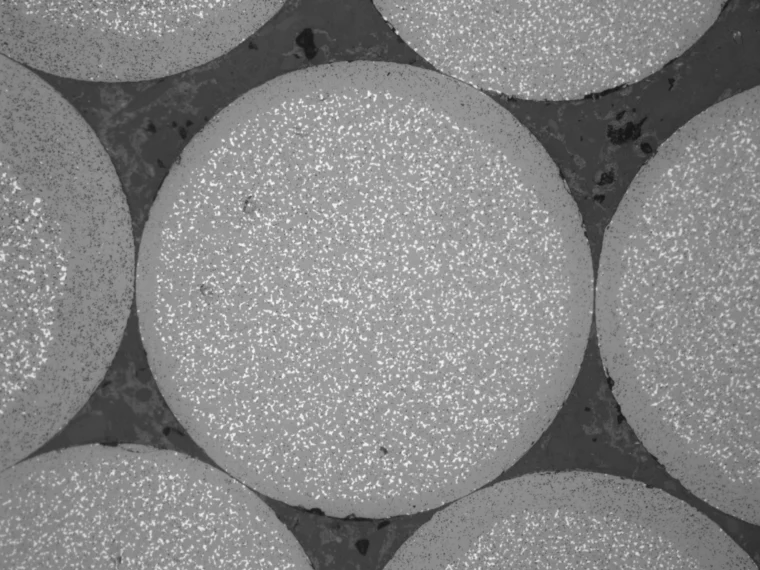
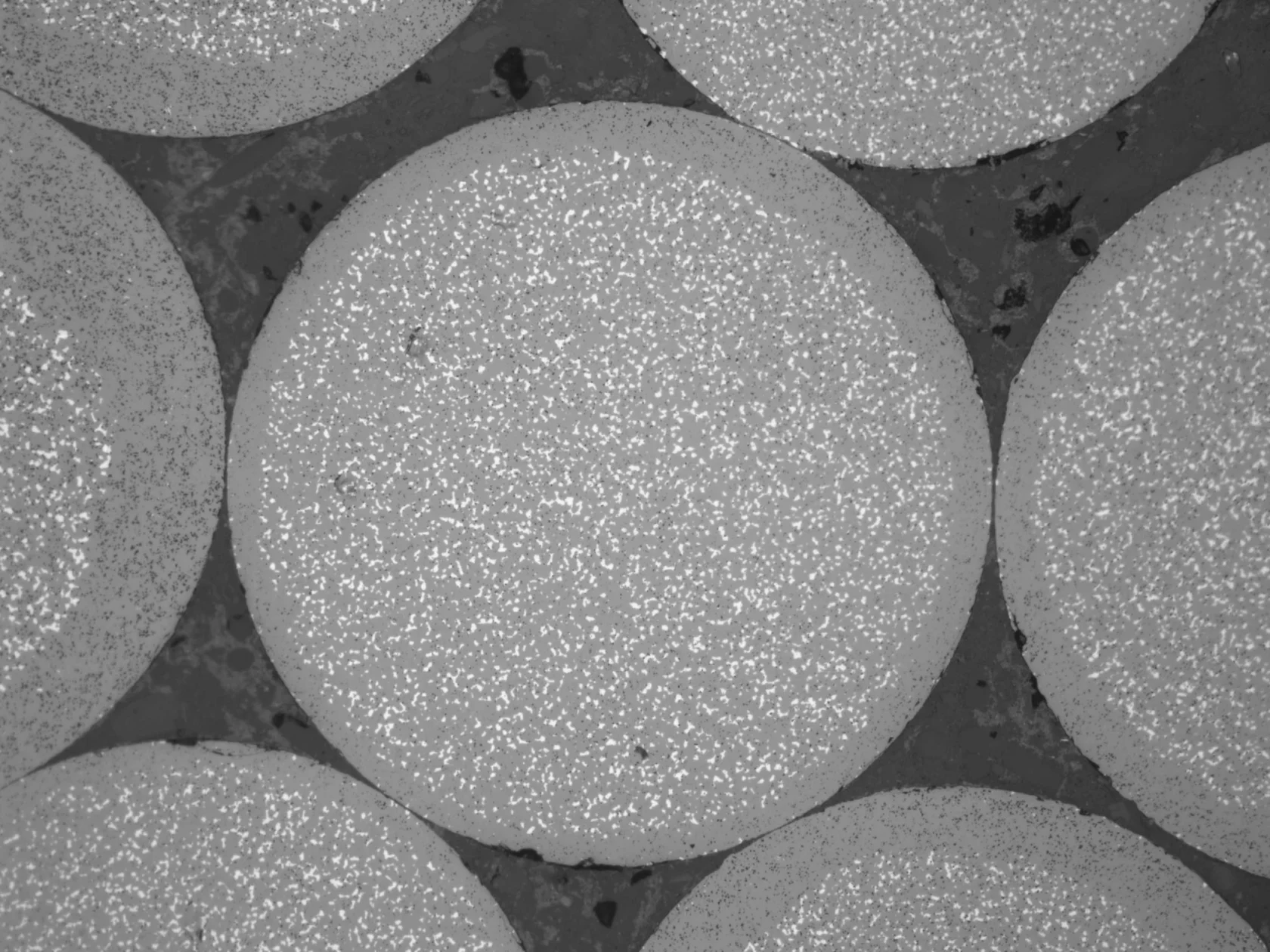
- Coated Particle Layers: Particle coating expertise across pyrolytic carbon, silicon carbide (SiC), zirconium carbide (ZrC), bistructural isotropic (BISO), and tristructural isotropic (TRISO) architectures.
- Diverse Fuel Form Development: Compaction of coated particles into alternate fuel forms including pebbles, compacts, and others.
- Material Advisory Services: Specialized consultation on physical properties, core material interactions, and production optimization.
Specifications & Technical Documentation
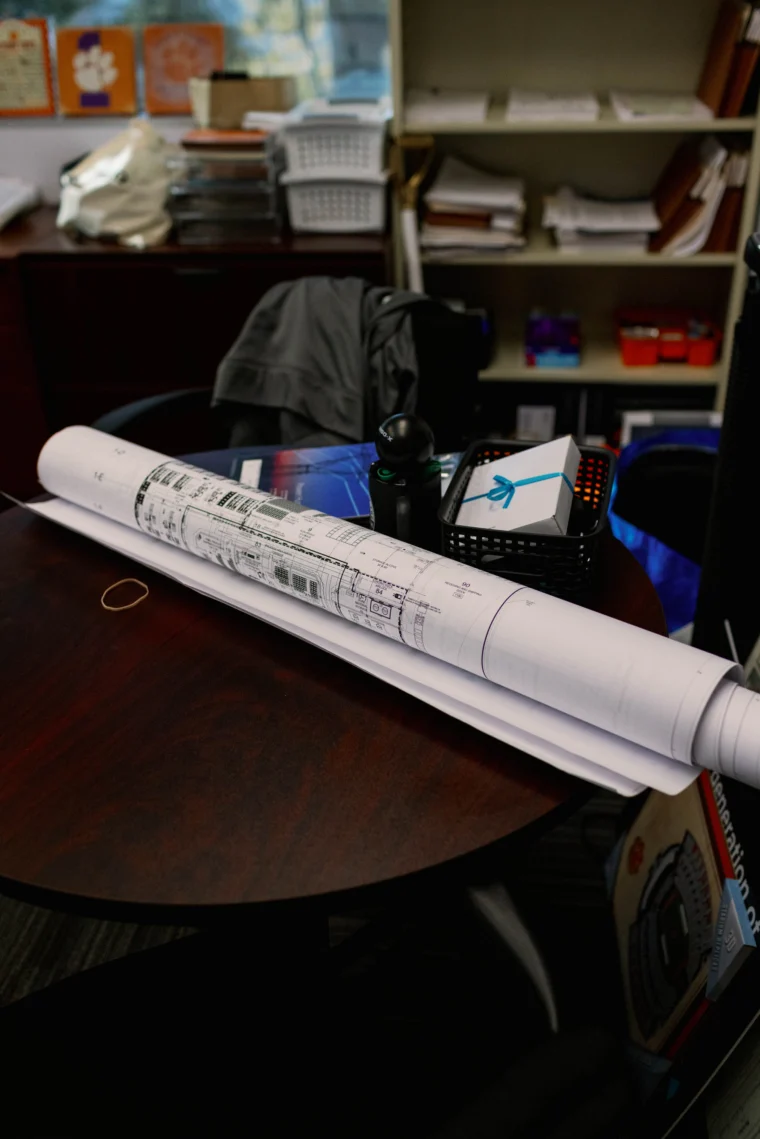
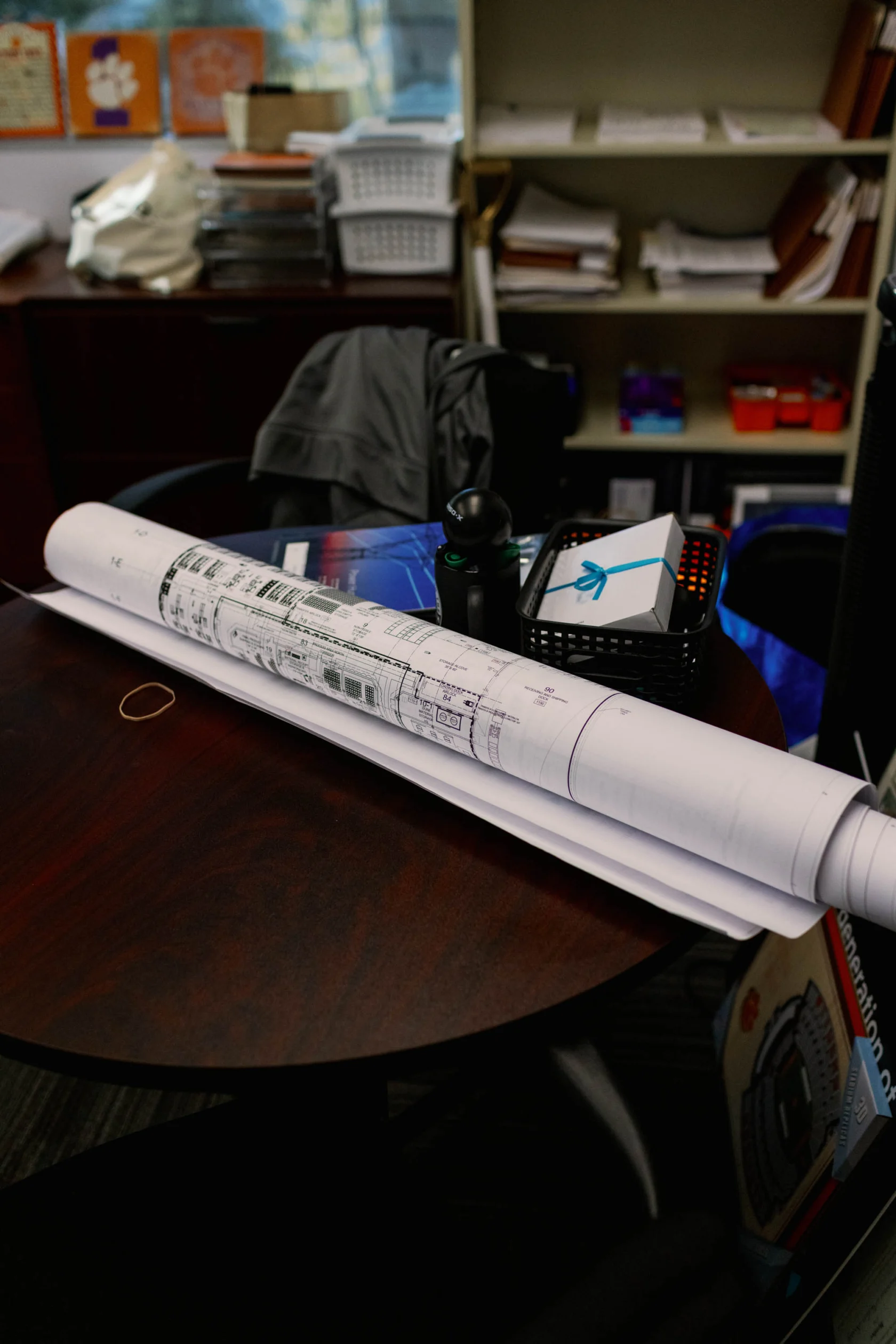
Concepting, developing, fabricating, and scaling advanced nuclear fuel requires fully traceable technical documentation. TRISO-X drafts, reviews, and finalizes detailed fuel and manufacturing specifications built on proven operational standards, building regulatory rigor and quality assurance directly into every asset, to prepare partners for licensing reviews and the secure transfer of proven processes into production.
- Detailed Fuel Specifications: Authors precise dimensional, chemical, and physical tolerance limits for custom fuel designs.
- Regulatory Submission Support: Prepares fabrication and quality specifications formatted for regulatory review.
- Technology Transfer Packages: Delivers standardized processes for UCO kernels, coated particle layers, graphite matrix formulations, and fuel form pressing.
R&D Services & Characterization
Our TX-L facility is designed to deliver precision fuel characterization and testing to measure material behavior under the most extreme operating conditions. We combine analytical chemistry with extreme high-temperature testing systems to analyze kernels, barrier layers, matrix materials, and surrogate test samples.
- Chemistry Analysis: High-precision chemical and isotopic evaluation capabilities on uranium compounds, surrogate materials, and matrix elements.
- High-Temperature Material Testing: Evaluates structural integrity, fission product retention, and material stability under extreme thermal environments.
- Thermal Property Measurements: Measures thermal expansion, conductivity, and specific heat across ZrC, SiC, graphite, and surrogate materials.
- Light Flash Analysis (LFA): Measures thermal diffusivity and thermal conductivity across broad temperature ranges.
- Differential Scanning Calorimetry (DSC): Tracks specific heat capacity and phase transformations during high-heat exposure.
- Dilatometry (DIL): Measures precise dimensional changes and thermal expansion behavior with sub-micron accuracy.
- Simultaneous Thermal Analysis (STA): Analyzes mass changes and thermal reactions at the same time using combined thermogravimetric analysis (TGA) and DSC methods.