Our Nuclear Fuel
Built on Physics, Engineered for Scale
The most robust nuclear fuel form on Earth, scaled to secure America’s energy future.
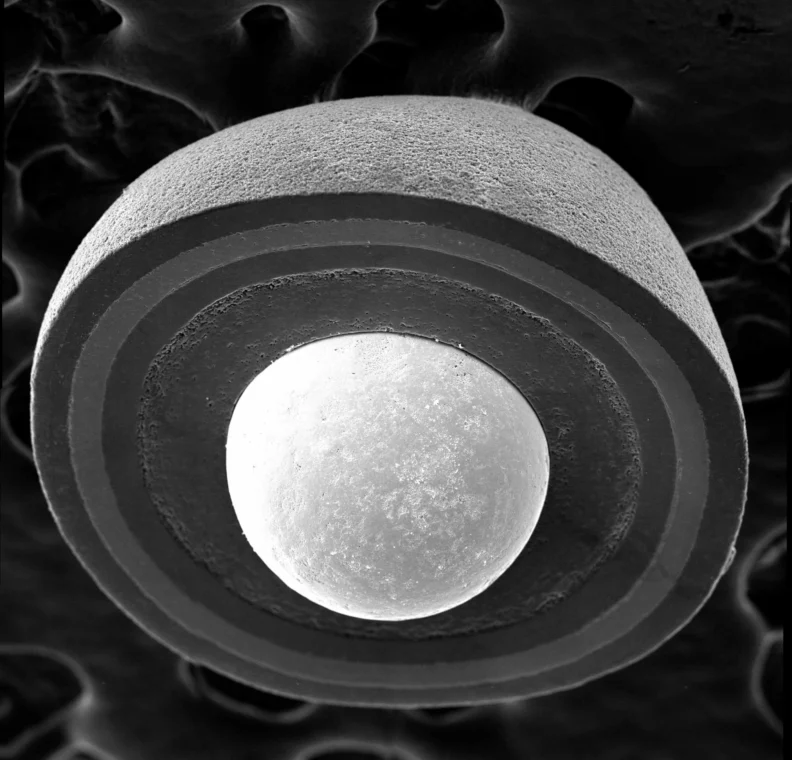
TRISO-X Fuel Particles
Coated Particle Fuel
Thousands of coated kernels per fuel form
Precision Fabrication
Produced using patented processes
Multi-Layered Safety
Ceramic layers trap fission products
Extreme Heat Tolerance
Remains stable above 1,450°C
HALEU Fuel
Enables higher efficiency and burnup
Graphite Matrix
Embedded in a durable graphite matrix
Proliferation Resistant
High burnup reduces usable isotopes
Safe Storage
Simplified spent fuel handling
The New Nuclear
Safety Case
TRISO-X fuel design safety into the fuel itself, enabling a negative temperature coefficient that acts as a built-in brake pedal: if temperatures rise, the fission chain reaction slows without operator action, mechanical backups, or off-site power as ceramic and carbon layers around each uranium kernel retain fission products at the source, doing the work of thousands of tons of concrete and steel in an area the size of a poppy seed.
Our fuel is engineered to perform in utility-scale small modular reactor (SMR) cores and road-transportable microreactors. Fabrication across a range of enrichment levels supports longer operating cycles, higher burnup, and a long-term path to cost-competitive advanced nuclear fuel.
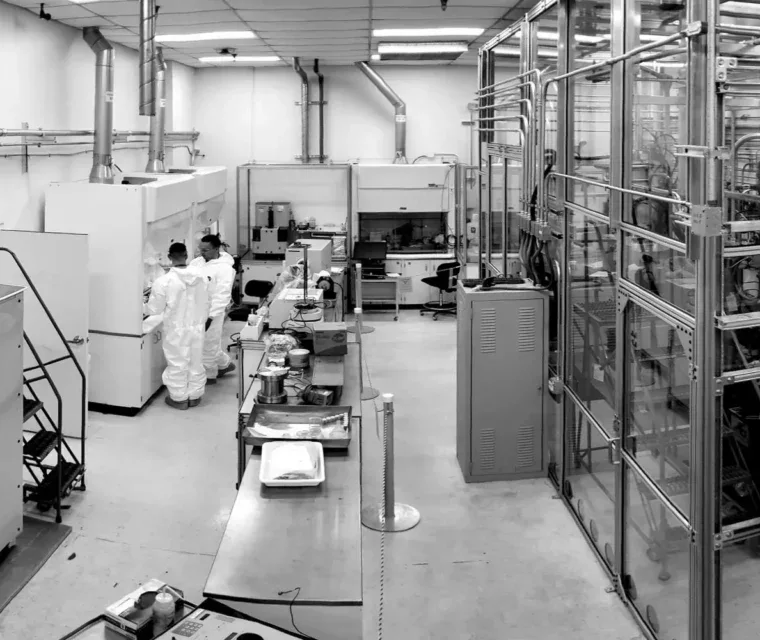
Diverse Fuel Forms
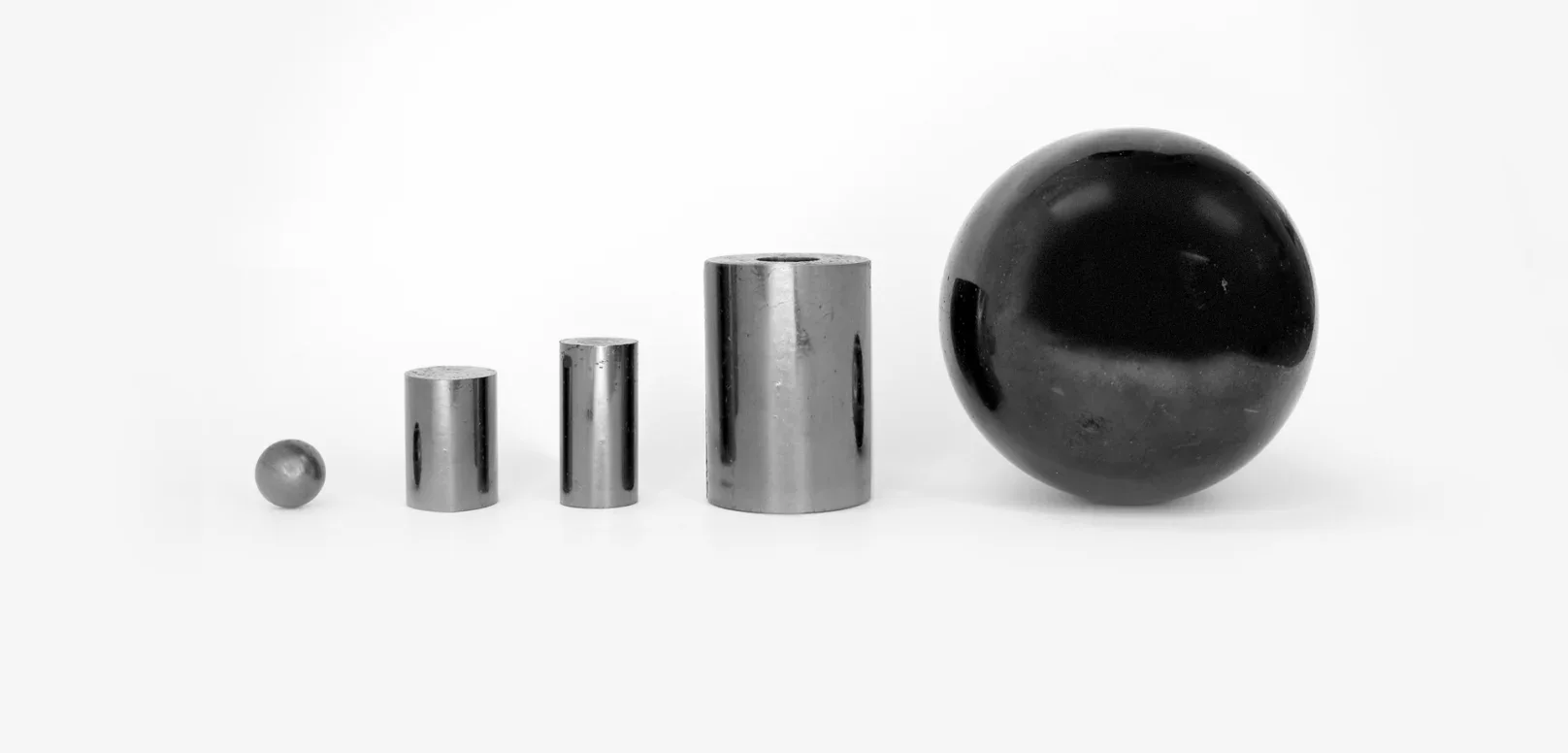
Our commercial fuel facilities are designed to produce TRISO fuel forms tailored to any customer specification, from graphite-matrix pebbles and compacts to loose coated particles.
Spherical Pebbles
Formulated for pebble-bed reactors like the Xe-100, enabling automated online refueling while the reactor keeps running.
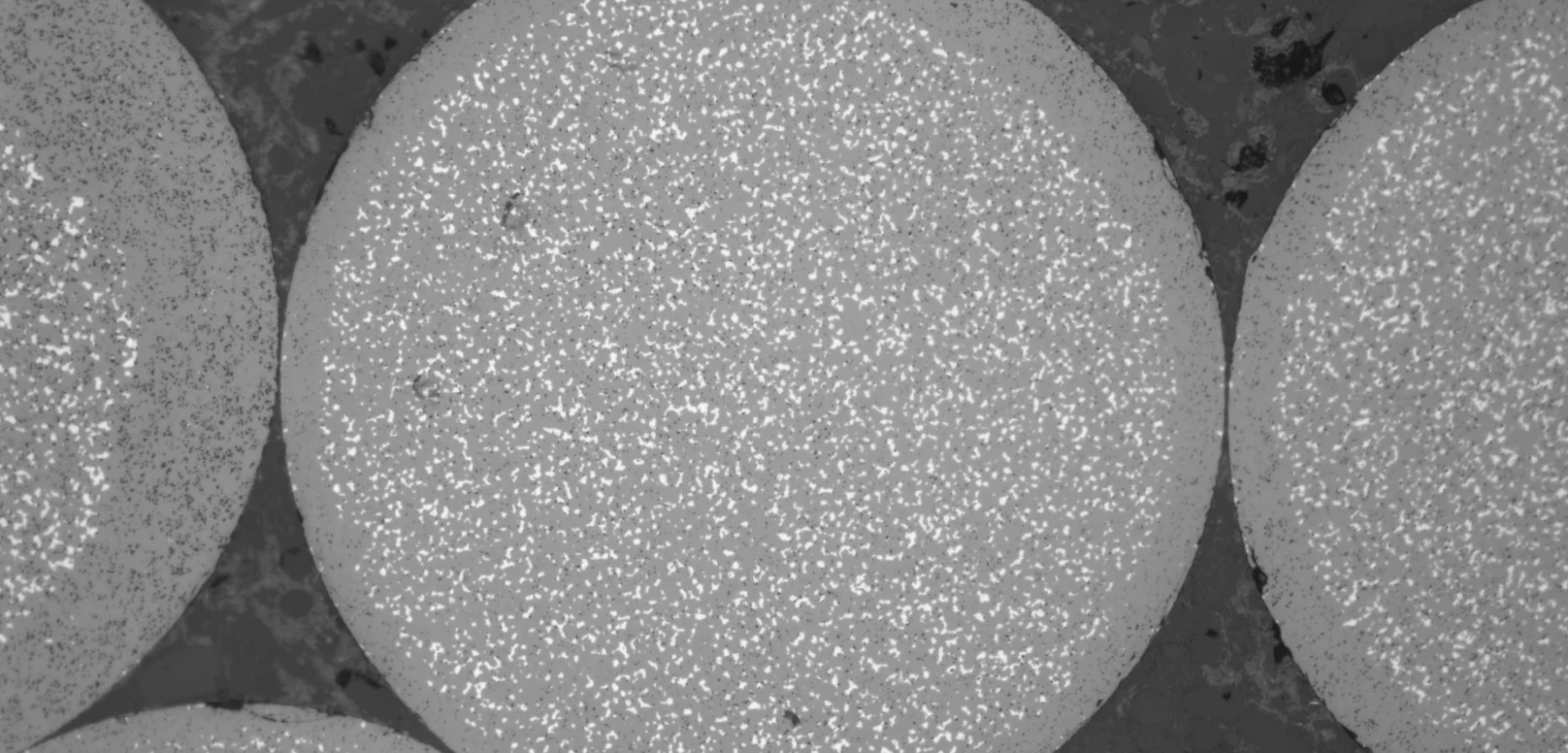
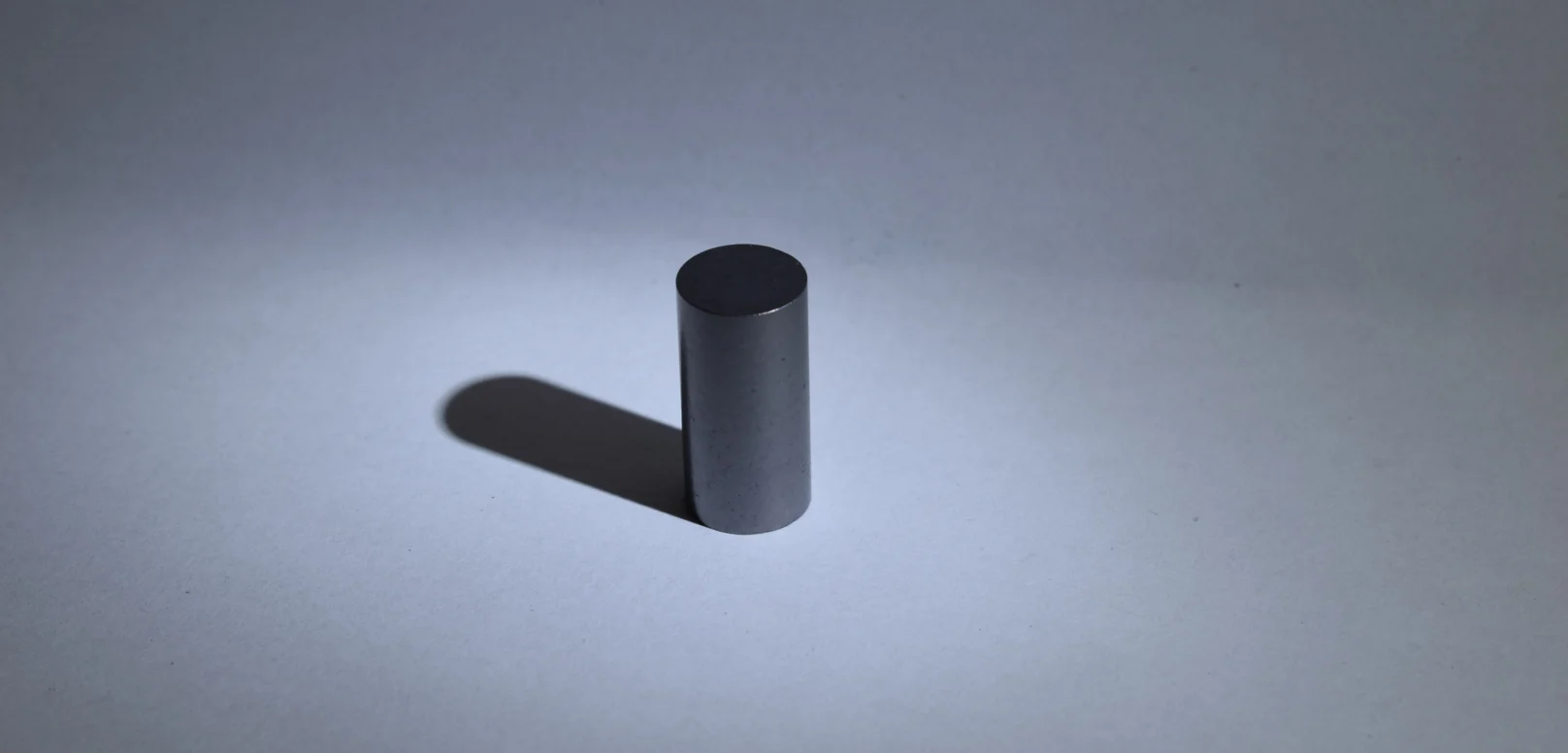
High-Density Compacts
Precision-pressed cylindrical fuel forms engineered for fixed-block SMR core configurations.
Loose TRISO Particles
Custom-coated particles delivered to precise layer thickness and densities for microreactors, defense systems, and space propulsion.
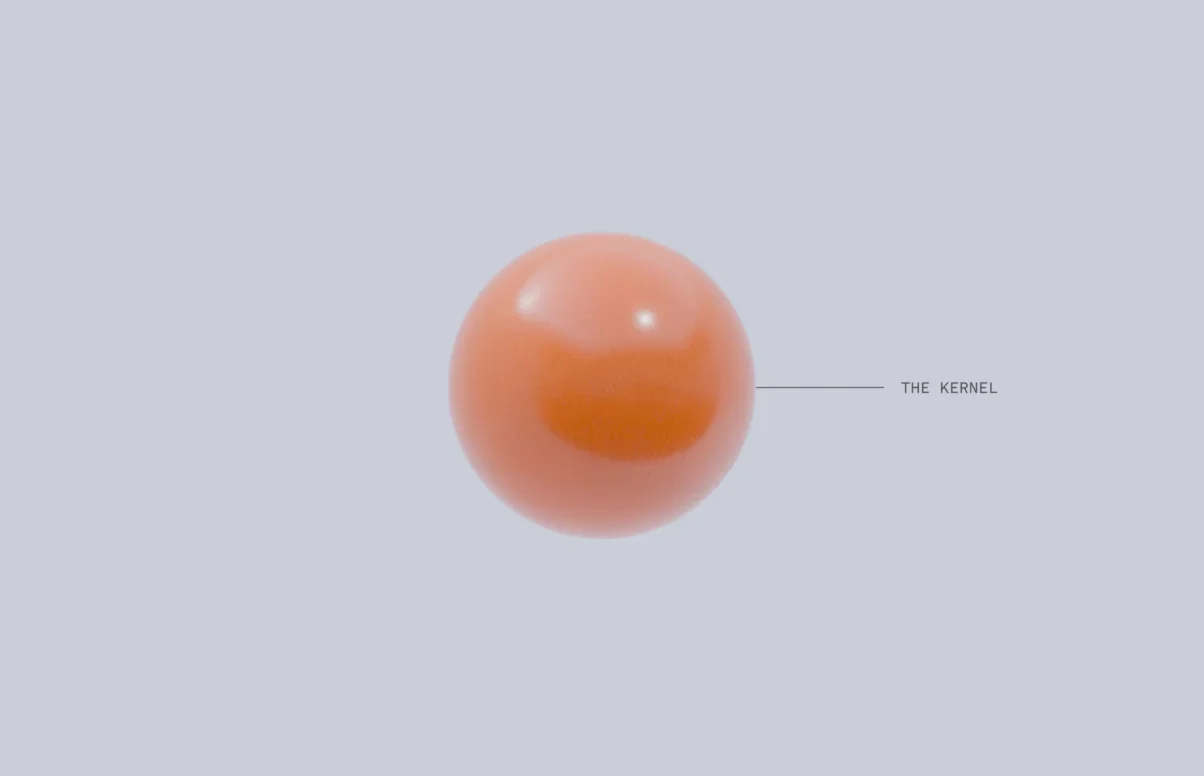
The Kernel
The foundation of every TRISO-X fuel particle is a high-assay low-enriched uranium (HALEU) kernel, fabricated to proven specifications with our proprietary production processes, and designed for higher burnup than conventional fuels. Validated by decades of data and design iteration, and rigorous NQA-1 procedures, our fuel is designed from the atom up for quality and precision.
- Gelation Precision: Chemical production controls maintain mean kernel diameters within 2 micrometers of target specifications.
- Optimized Resource Efficiency: A tighter size distribution means fewer off-spec kernels, reducing uranium rework and material waste.
- Proven Material Pedigree: Backed by 60 years of Department of Energy research, and the Advanced Gas Reactor program’s extensive irradiation testing across multiple fuel designs.
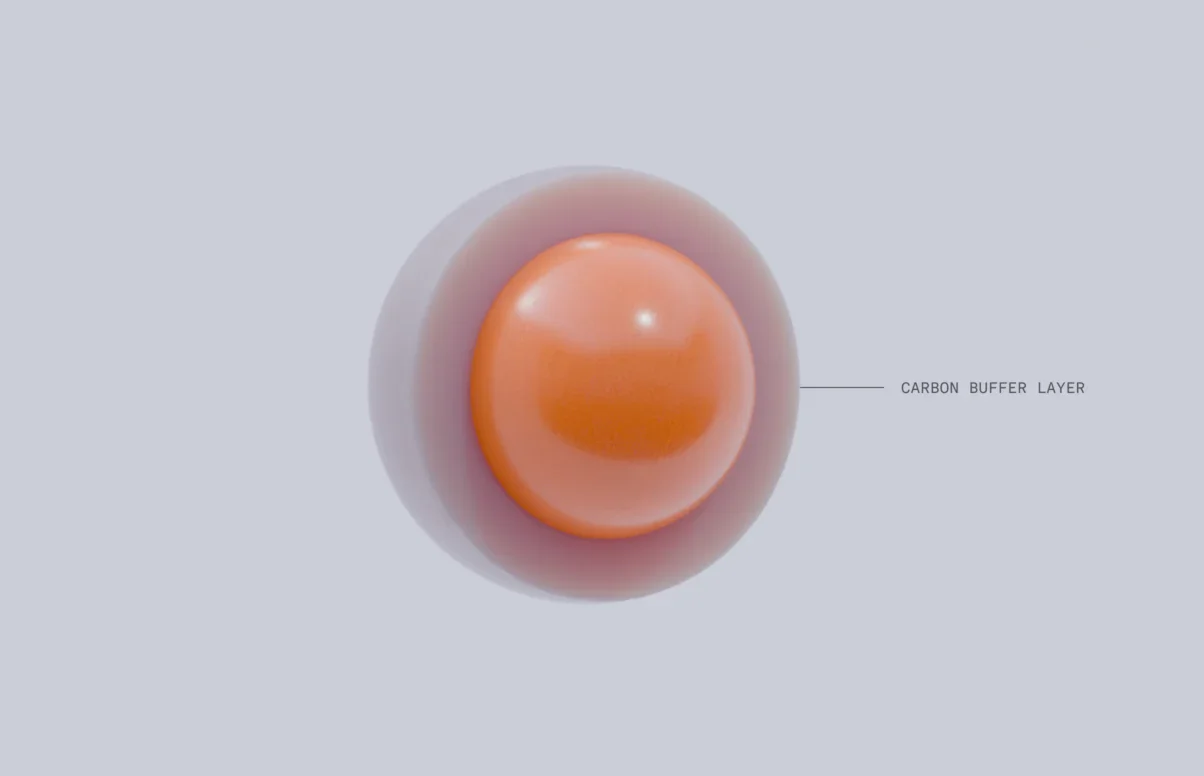
Carbon Buffer Layer
The first layer, which consists of approximately 50% dense pyrocarbon and serves two primary functions: it provides void space to accommodate fission gases released from the kernel and creates distance between the kernel and the other coating layers to prevent concentrated damage in those layers from high-energy fission product recoils.
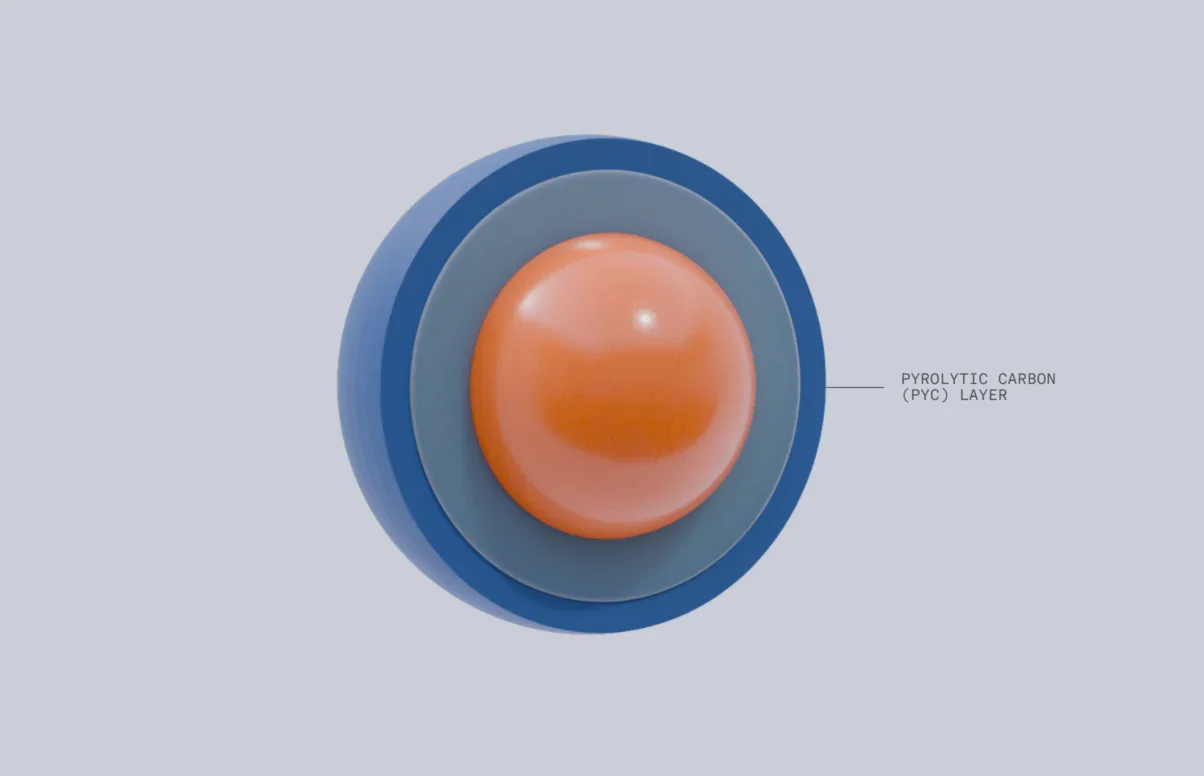
Pyrolytic Carbon (PyC) Layer
The PyC layer functions as an effective barrier to gasses and diffusion of many of the actinides and fission products. The IPyC layer is responsible for contributing to retention of fission gasses during irradiation and protecting the kernel from HCl vapor, which is a byproduct of the silicon carbide (SiC) layer deposition process. The OPyC layer also contributes to the retention of fission products and acts as a substrate to bond the graphite matrix.
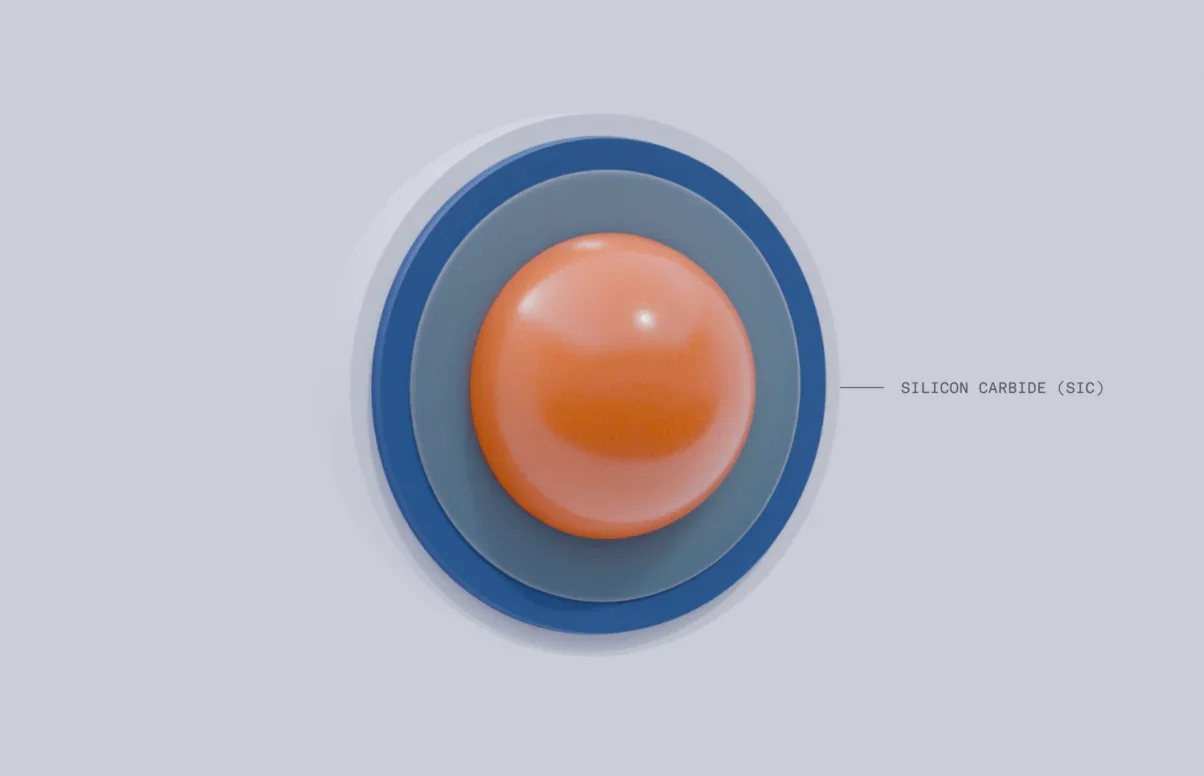
Silicon Carbide (SiC)
The SiC layer critically serves as both the primary source of structural strength for the particle and the primary barrier to the release of fission products which are not retained within the kernel.
Outer Pyrolytic Carbon
An outer protective carbon layer that bonds to graphite and shields the silicon carbide layer.